

Pass4sures MD-102 Exam Questions | Real MD-102 Practice Dumps
Verified MD-102 Exam Dumps Q&As - Provide MD-102 with Correct Answers
Microsoft MD-102 Exam Syllabus Topics:
| Topic | Details |
|---|---|
| Topic 1 |
|
| Topic 2 |
|
| Topic 3 |
|
| Topic 4 |
|
NEW QUESTION # 15
You have an on-premises Active Directory domain that syncs to Azure AD tenant.
The tenant contains computers that run Windows 10. The computers are hybrid Azure AD joined and enrolled in Microsoft Intune. The Microsoft Office settings on the computers are configured by using an Group Policy Object (GPO).
You need to migrate the GPO to Intune.
Which three actions should you perform in sequence? To answer, move the appropriate actions from the list of actions to the answer area and arrange them in the correct order.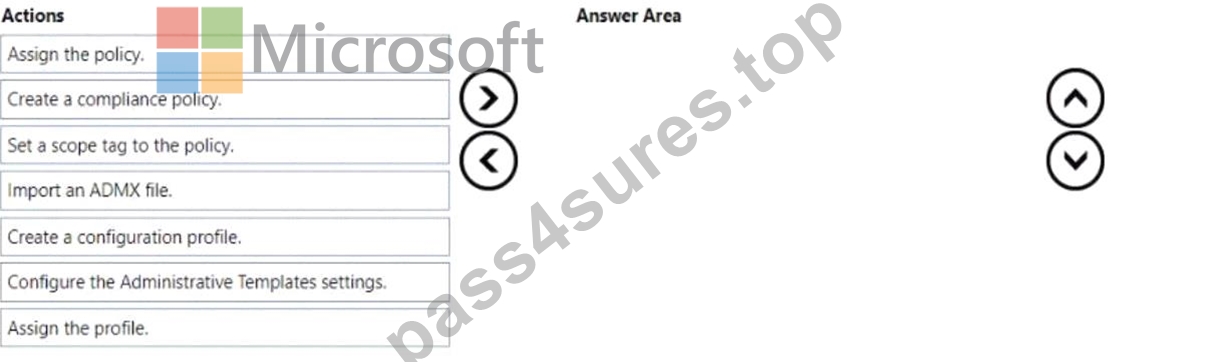
Answer:
Explanation: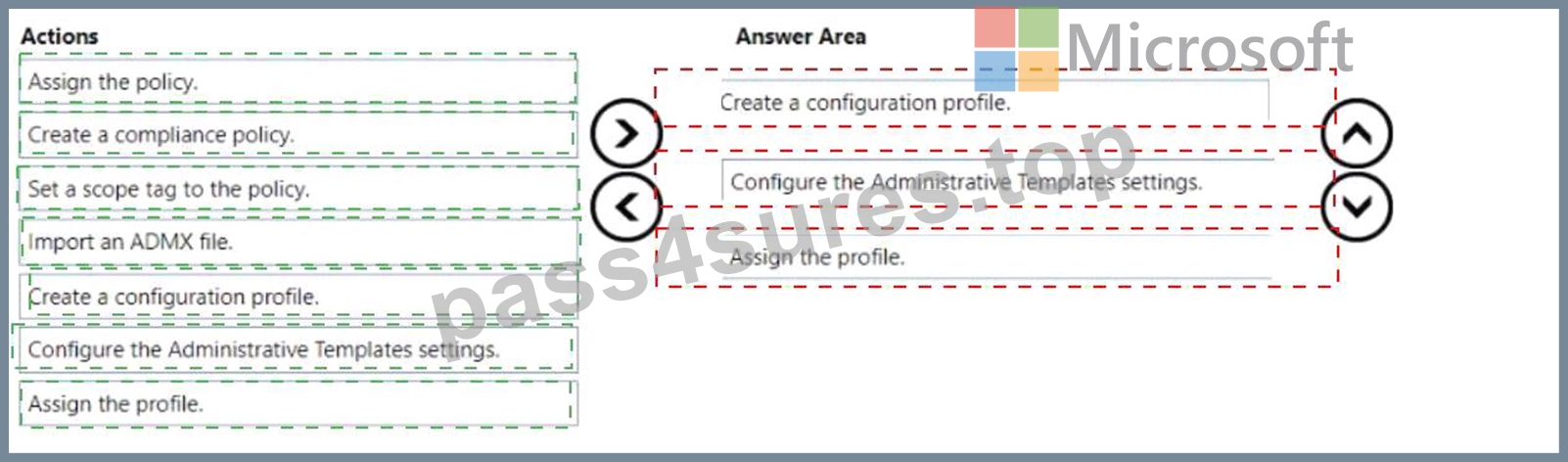
Explanation: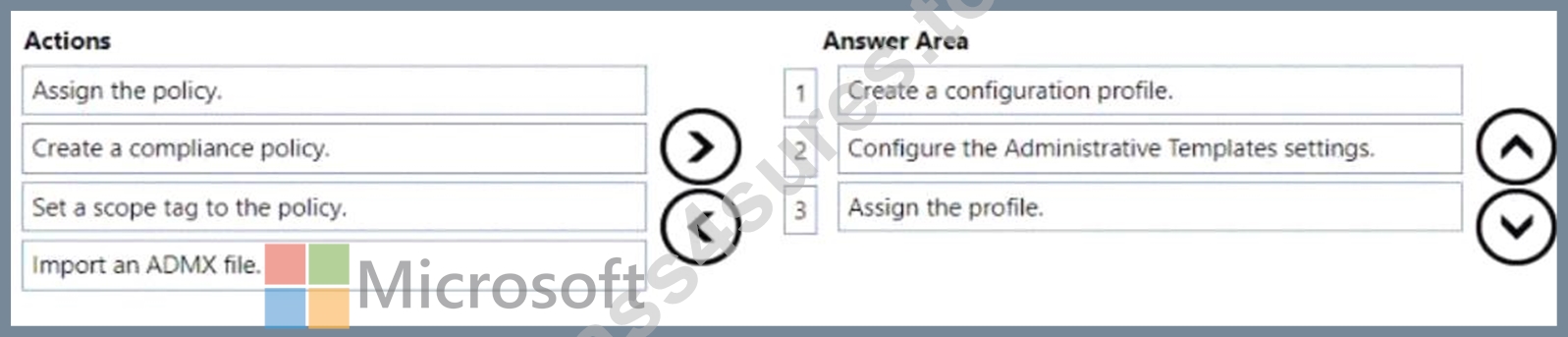
NEW QUESTION # 16
You have two computers that run Windows 10. The computers are enrolled in Microsoft Intune as shown in the following table.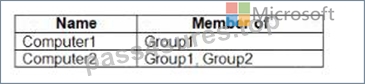
Windows 10 update rings are defined in Intune as shown in the following table.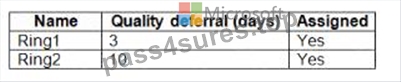
You assign the update rings as shown in the following table.
What is the effect of the configurations on Computer1 and Computer2? To answer, select the appropriate options in the answer area.
NOTE: Each correct selection is worth one point.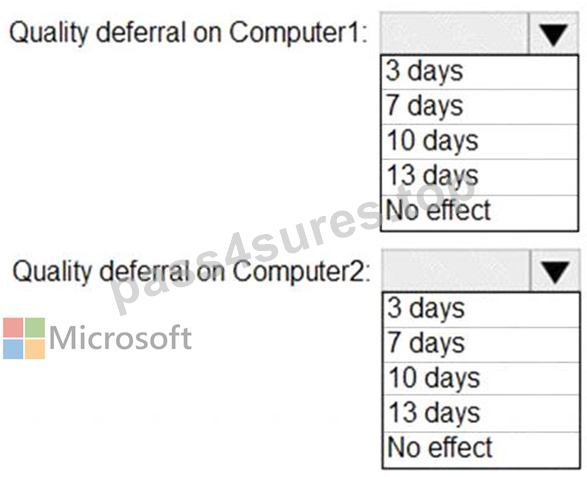
Answer:
Explanation: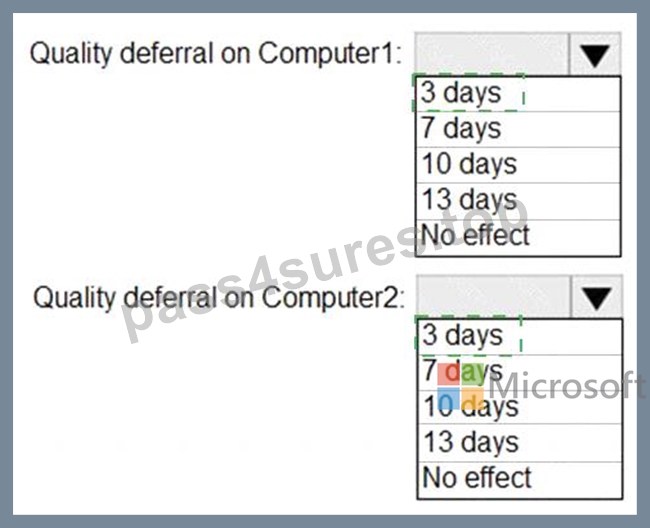
Explanation: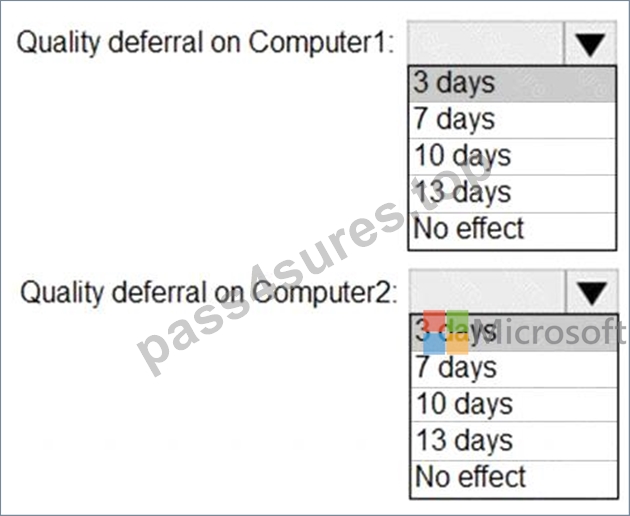
Computer1 and Computer2 are members of Group1. Ring1 is applied to Group1.
Note: The term "Exclude" is misleading. It means that the ring is not applied to that group, rather than that group being blocked.
References:
https://docs.microsoft.com/en-us/windows/deployment/update/waas-wufb-intune
https://allthingscloud.blog/configure-windows-update-business-using-microsoft-intune/
NEW QUESTION # 17
You have a Microsoft 365 subscription.
You have 10 computers that run Windows 10 and are enrolled in mobile device management (MDM).
You need to deploy the Microsoft 36S Apps for enterprise suite to all the computers.
What should you do?
- A. From Azure AD, add an app registration.
- B. From Azure AD. add an enterprise application.
- C. From the Microsoft Intune admin center, create a Windows 10 device profile.
- D. From the Microsoft Intune admin center, add an app.
Answer: D
Explanation:
To deploy Microsoft 365 Apps for enterprise to Windows 10 devices that are enrolled in Intune, you need to add an app of type "Windows 10 app (Win32)" in the Microsoft Intune admin center and configure the app settings. You can then assign the app to groups of users or devices. Reference: https://docs.microsoft.com/en-us/mem/intune/apps/apps-win32-app-management
NEW QUESTION # 18
You have a Microsoft 365 ES subscription.
You need to review and implement Microsoft 365 Defender device onboarding. The solution must meet the following requirements:
* View onboarded devices that have the Chromium-based version of Microsoft Edge installed,
* Download an onboarding package for a Windows 11 device.
* Minimize administrative effort.
Which two settings should you use in the Microsoft 365 Defender portal? To answer, select the appropriate settings in the answer are a.
NOTE: Each correct selection is worth one point.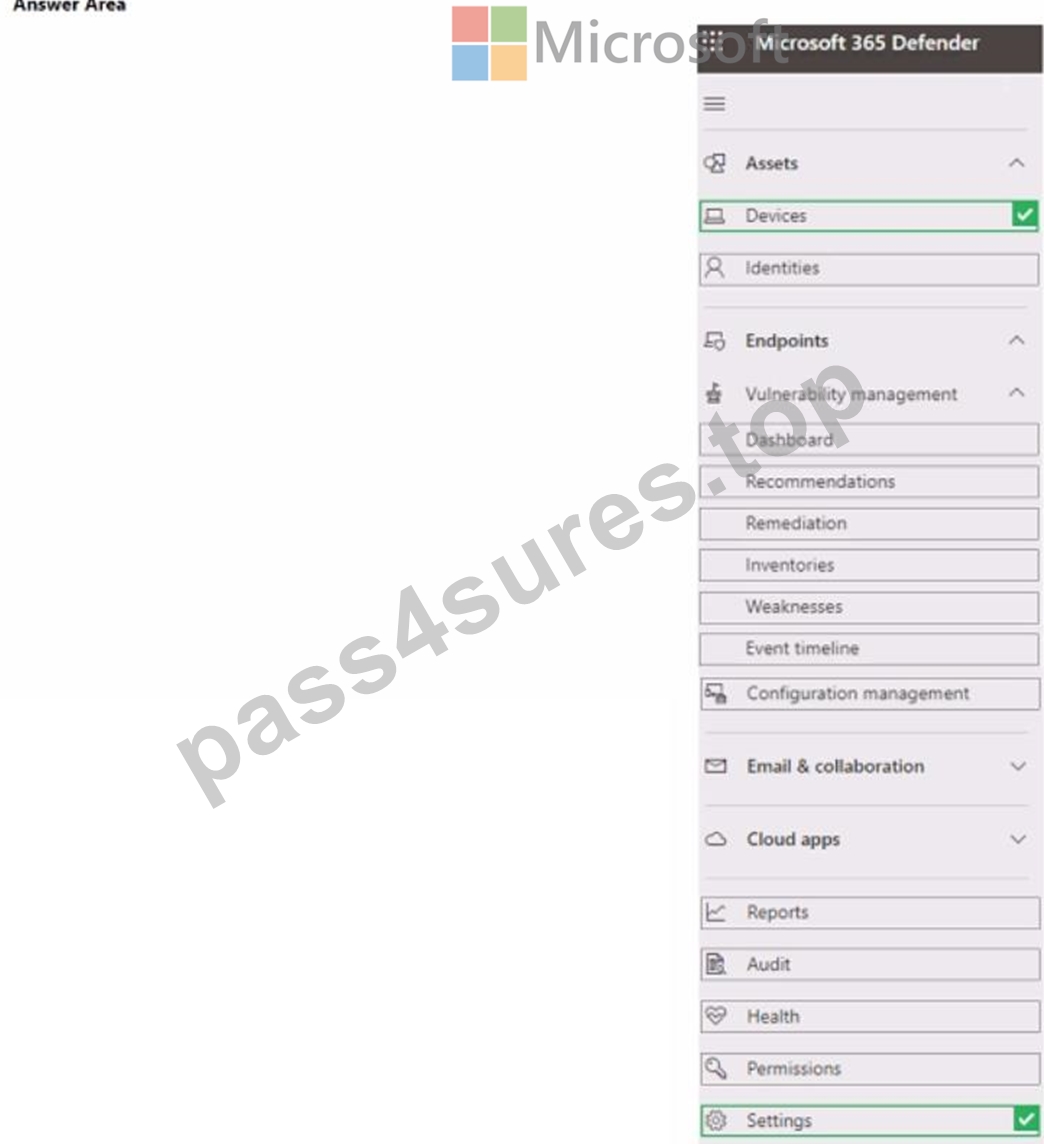
Answer:
Explanation: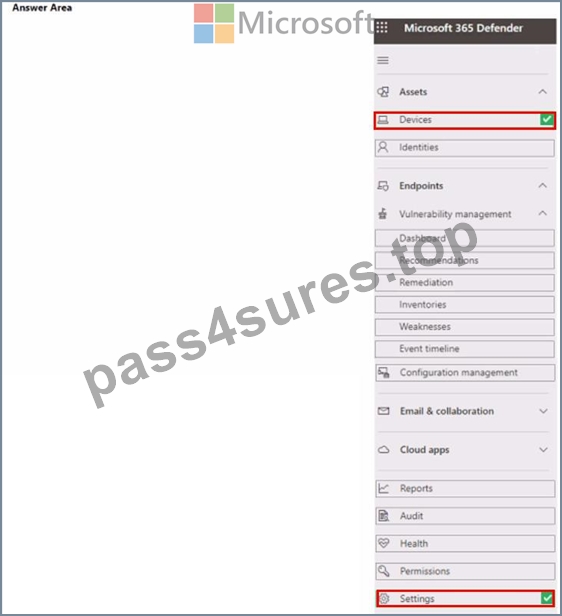
NEW QUESTION # 19
You have a Microsoft 365 subscription that contains the devices shown in the following table.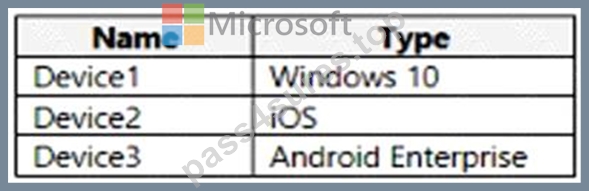
You need to ensure that only devices running trusted firmware or operating system builds can access network resources.
Which compliance policy setting should you configure for each device? To answer, drag the appropriate settings to the correct devices. Each setting may be used once, more than once, or not at all. You may need to drag the split bar between panes or scroll to view content.
NOTE:Each correct selection is worth one point.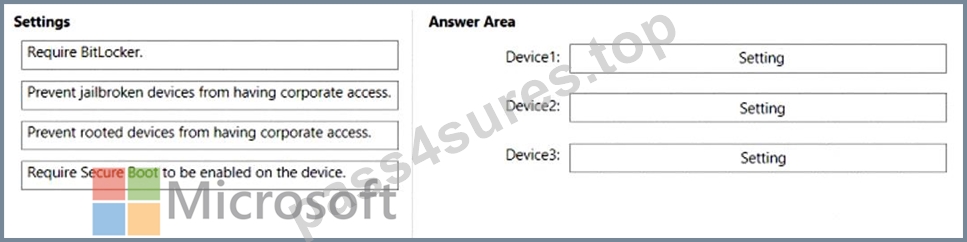
Answer:
Explanation: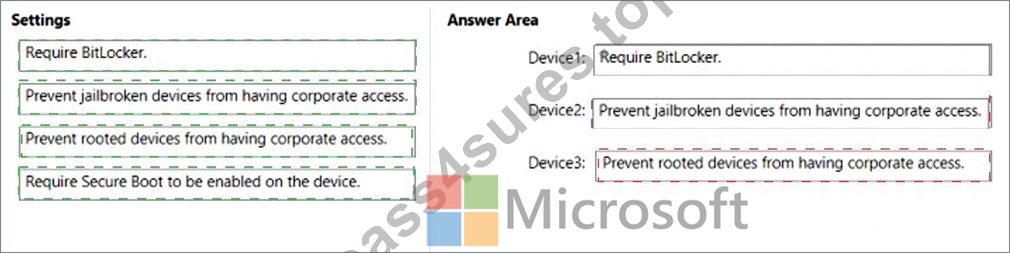
Explanation:
Box 1:
Device Compliance settings for Windows 10/11 in Intune
There are the different compliance settings you can configure on Windows devices in Intune. As part of your mobile device management (MDM) solution, use these settings to require BitLocker, set a minimum and maximum operating system, set a risk level using Microsoft Defender for Endpoint, and more.
Note: Windows Health Attestation Service evaluation rules
Require BitLocker:
Windows BitLocker Drive Encryption encrypts all data stored on the Windows operating system volume.
BitLocker uses the Trusted Platform Module (TPM) to help protect the Windows operating system and user data. It also helps confirm that a computer isn't tampered with, even if its left unattended, lost, or stolen. If the computer is equipped with a compatible TPM, BitLocker uses the TPM to lock the encryption keys that protect the data. As a result, the keys can't be accessed until the TPM verifies the state of the computer.
Not configured (default) - This setting isn't evaluated for compliance or non-compliance.
Require - The device can protect data that's stored on the drive from unauthorized access when the system is off, or hibernates.
Box 2: Prevent jailbroken devices from having corporate access
Device Compliance settings for iOS/iPadOS in Intune
There are different compliance settings you can configure on iOS/iPadOS devices in Intune. As part of your mobile device management (MDM) solution, use these settings to require an email, mark rooted (jailbroken) devices as not compliant, set an allowed threat level, set passwords to expire, and more.
Device Health
Jailbroken devices
Supported for iOS 8.0 and later
Not configured (default) - This setting isn't evaluated for compliance or non-compliance.
Block - Mark rooted (jailbroken) devices as not compliant.
Box 3: Prevent rooted devices from having corporate access.
Device compliance settings for Android Enterprise in Intune
There are different compliance settings you can configure on Android Enterprise devices in Intune. As part of your mobile device management (MDM) solution, use these settings to mark rooted devices as not compliant, set an allowed threat level, enable Google Play Protect, and more.
Device Health - for Personally-Owned Work Profile
Rooted devices
Not configured (default) - This setting isn't evaluated for compliance or non-compliance.
Block - Mark rooted devices as not compliant.
Reference:https://docs.microsoft.com/en-us/mem/intune/protect/compliance-policy-create-windows
https://docs.microsoft.com/en-us/mem/intune/protect/compliance-policy-create-android-for-work
https://docs.microsoft.com/en-us/mem/intune/protect/compliance-policy-create-ios
NEW QUESTION # 20
You need to resolve the performance issues in the Los Angeles office.
How should you configure the update settings? To answer, select the appropriate options in the answer area.
NOTE: Each correct selection is worth one point.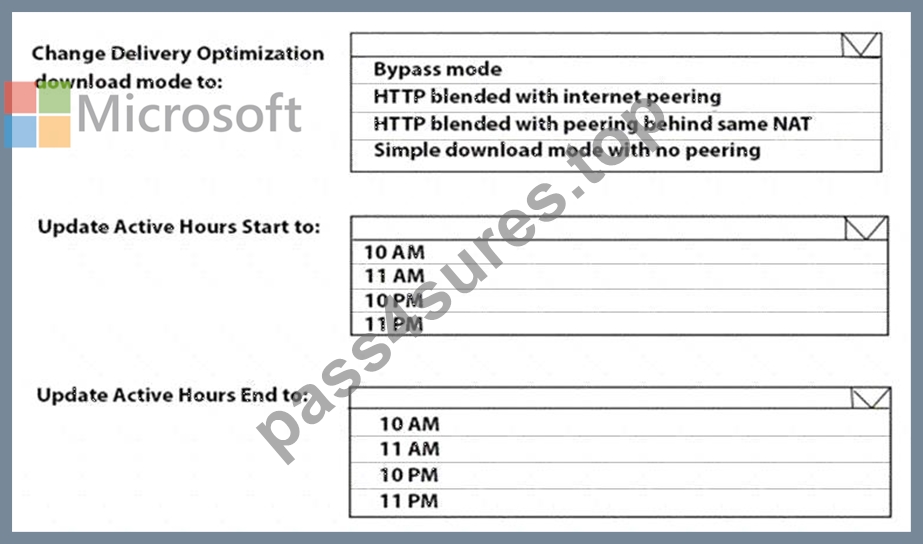
Answer:
Explanation: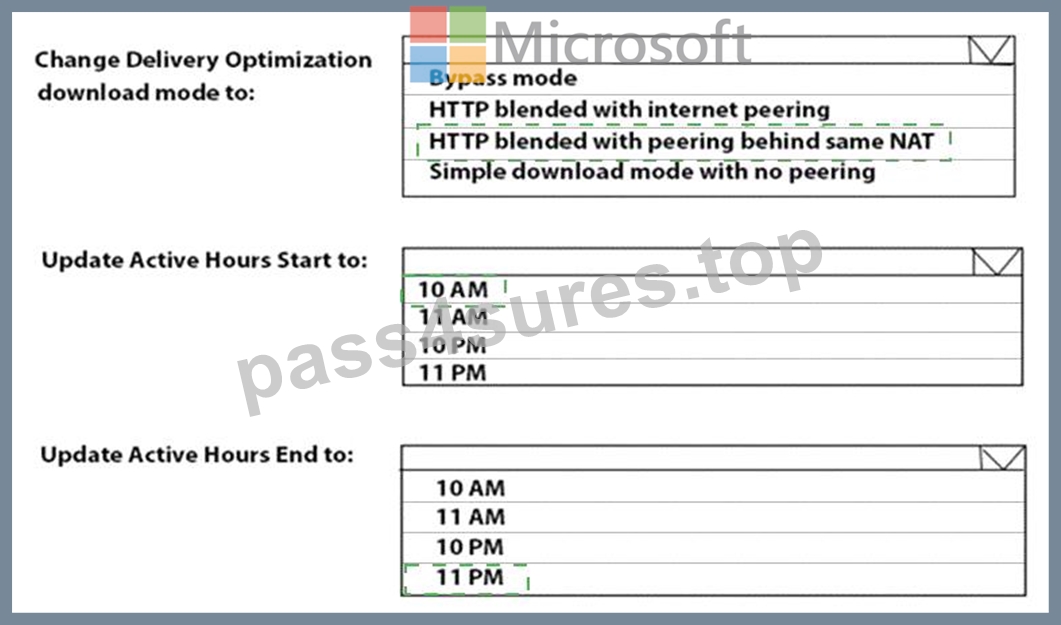
Explanation:
A screenshot of a computer Description automatically generated with low confidence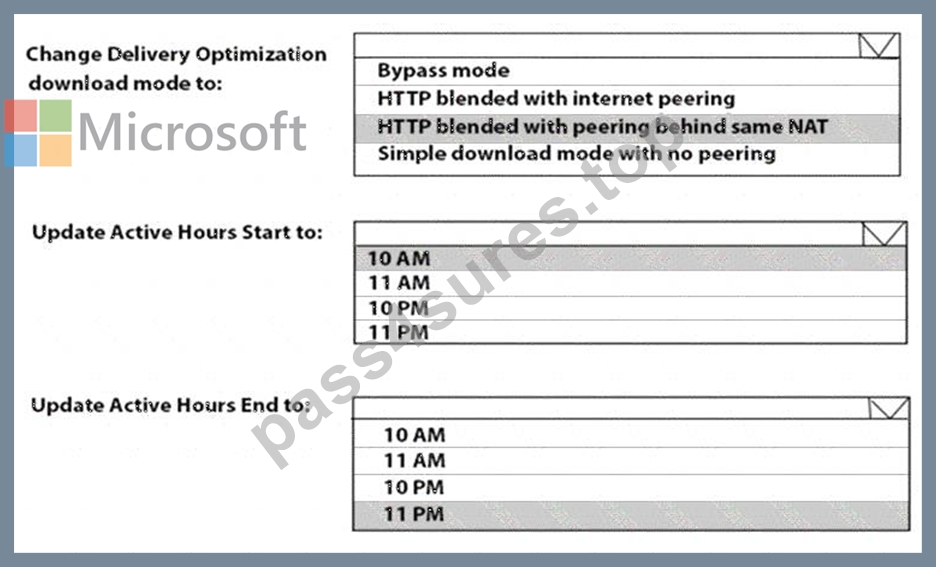
Reference:
https://docs.microsoft.com/en-us/windows/deployment/update/waas-delivery-optimization
https://2pintsoftware.com/delivery-optimization-dl-mode/
NEW QUESTION # 21
You have the device configuration profile shown in the following exhibit.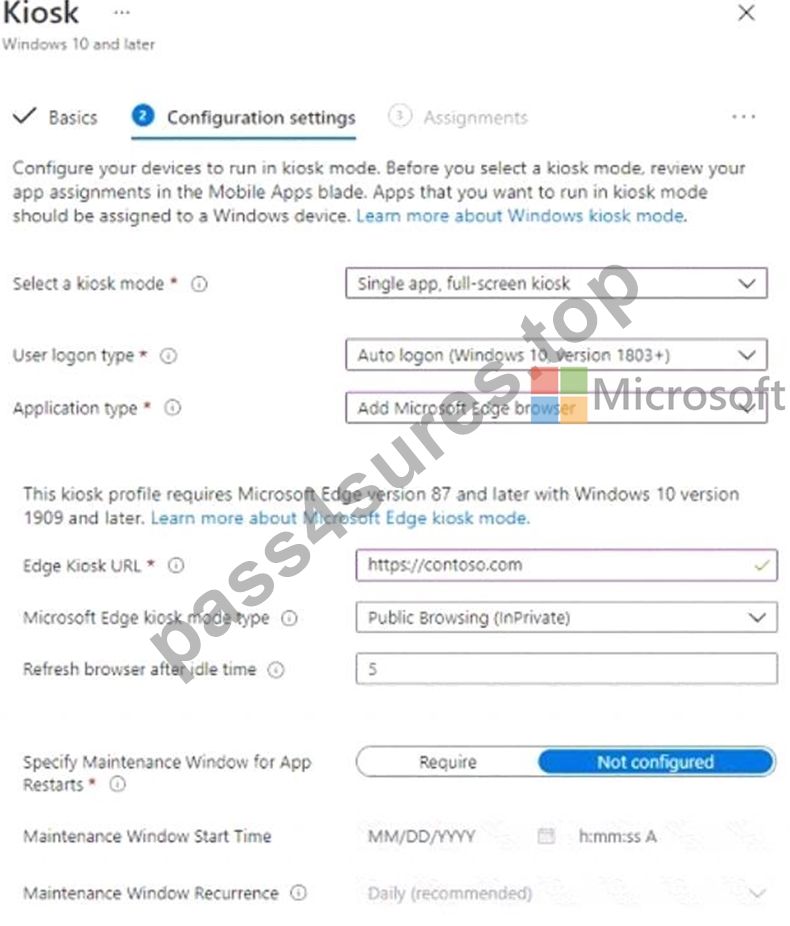
Use the drop-down menus to select the answer choice that completes each statement based on the information presented in the graphic. NOTE: Each correct selection is worth one point.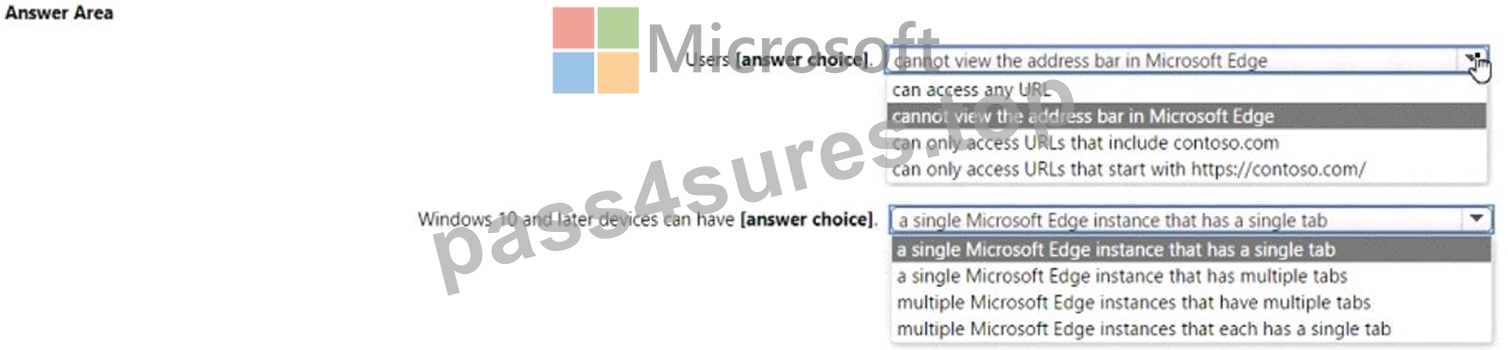
Answer:
Explanation: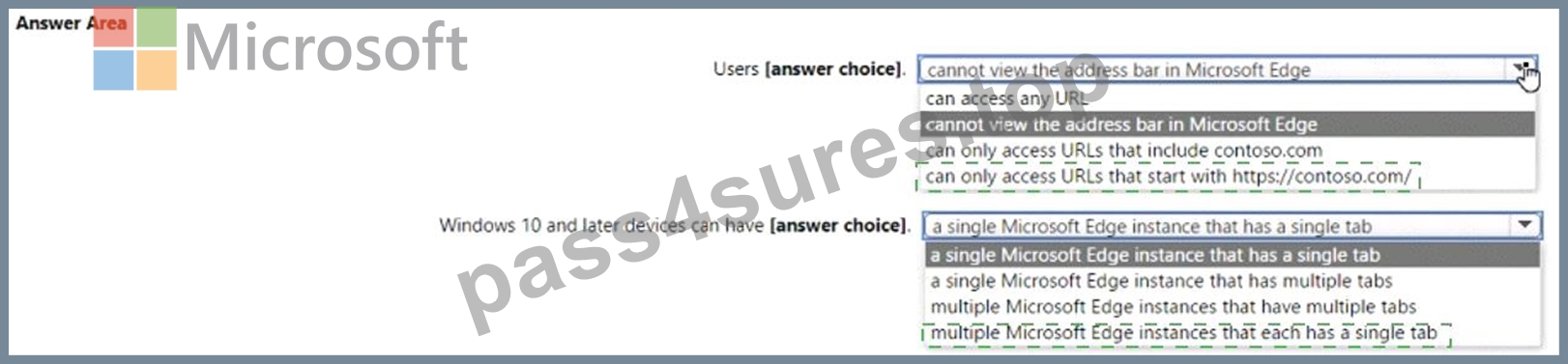
Explanation:
Users can only access URLs that start with https://contoso.com/ Windows 10 and later devices can have multiple Microsoft Edge instances that each has a single tab he device configuration profile shown in the exhibit is a kiosk browser profile that configures Microsoft Edge to run in kiosk mode. The profile has the following settings:
Kiosk mode: Enabled
Kiosk type: Multi-app
Allowed URLs: https://contoso.com/*
Address bar: Disabled
These settings mean that users can only access URLs that start with https://contoso.com/ and cannot view the address bar in Microsoft Edge. The kiosk type of Multi-app allows users to open multiple instances of Microsoft Edge, but each instance can only have a single tab. Therefore, users cannot access any URL, cannot view the address bar in Microsoft Edge, and can have multiple Microsoft Edge instances that each has a single tab. References:
https://docs.microsoft.com/en-us/mem/intune/configuration/kiosk-settings#kiosk-browser-settings
NEW QUESTION # 22
You have a Microsoft 365 E5 subscription and a computer that runs Windows 11.
You need to create a customized installation of Microsoft 365 Apps for enterprise.
Which four actions should you perform in sequence? To answer, move the appropriate cmdlets from the list of cmdlets to the answer area and arrange them in the correct order.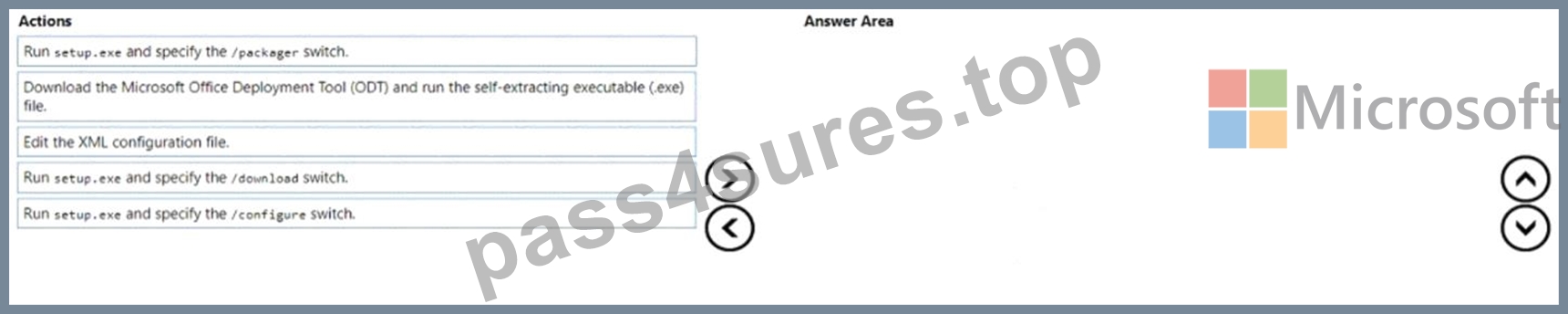
Answer:
Explanation: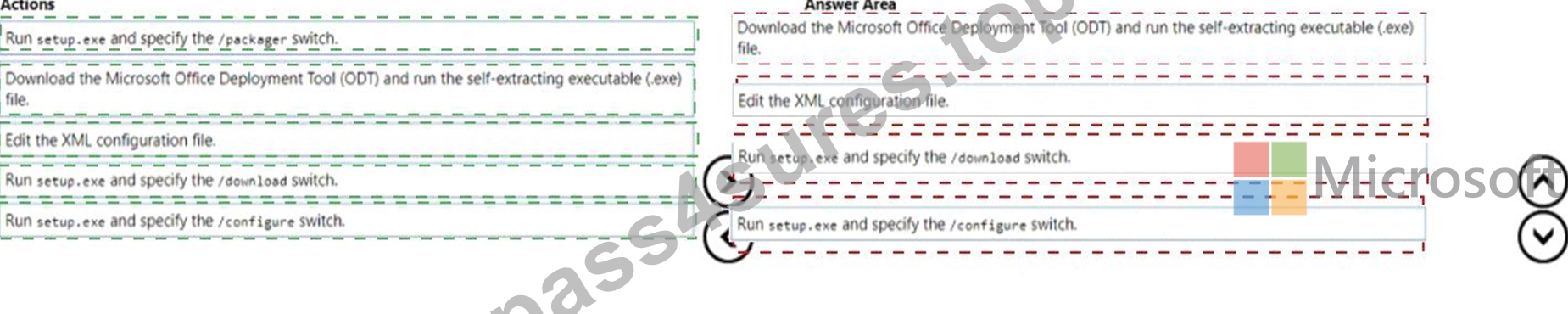
Explanation:
1. Download ODT application
2. Create a configuration file (XML)
3. setup.exe /download to download the installation files
4. setup.exe /configure to deploy the application
https://learn.microsoft.com/en-us/deployoffice/deploy-microsoft-365-apps-local-source
NEW QUESTION # 23
-
You have a Microsoft 365 subscription that contains devices enrolled in Microsoft Intune.
You need to create Endpoint security policies to enforce the following requirements:
* Computers that run macOS must have FileVault enabled.
* Computers that run Windows 10 must have Microsoft Defender Credential Guard enabled.
* Computers that run Windows 10 must have Microsoft Defender Application Control enabled.
Which Endpoint security feature should you use for each requirement? To answer, drag the appropriate features to the correct requirements. Each feature may be used once, more than once, or not at all. You may need to drag the split bar between panes or scroll to view content.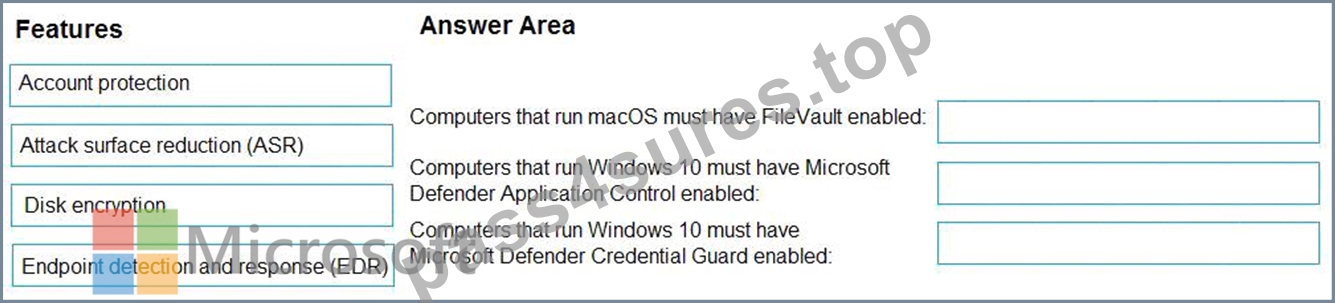
Answer:
Explanation: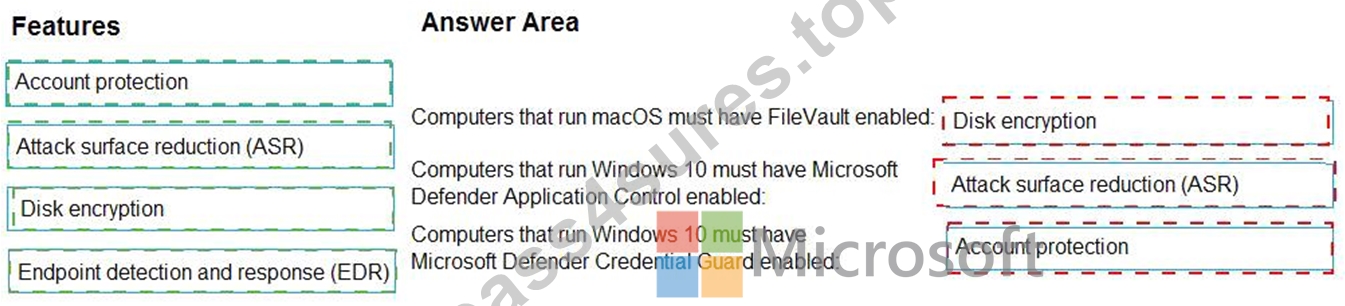
Explanation: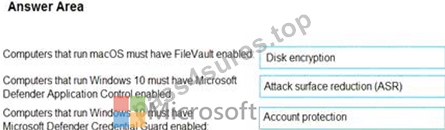
Disk Encryption
ASR - Ref
https://learn.microsoft.com/en-us/mem/intune/protect/endpoint-security-asr-policy#:~:text=Application%20contr Account Protection - Ref
https://learn.microsoft.com/en-us/windows/security/identity-protection/credential-guard/configure?tabs=intune#:
NEW QUESTION # 24
You have a Microsoft 365 subscription that contains 1,000 iOS devices. The devices are enrolled in Microsoft Intune as follows:
* Two hundred devices are enrolled by using the Intune Company Portal.
* Eight hundred devices are enrolled by using Apple Automated Device Enrollment (ADE).
You create an iOS/iPadOS software updates policy named Policy 1 that is configured to install iOS/iPadOS
15.5.
How many iOS devices will Policy1 update, and what should you configure to ensure that only iOS/iPadOS
15.5 is installed? To answer, select the appropriate options in the answer area.
NOTE: Each correct selection is worth one point.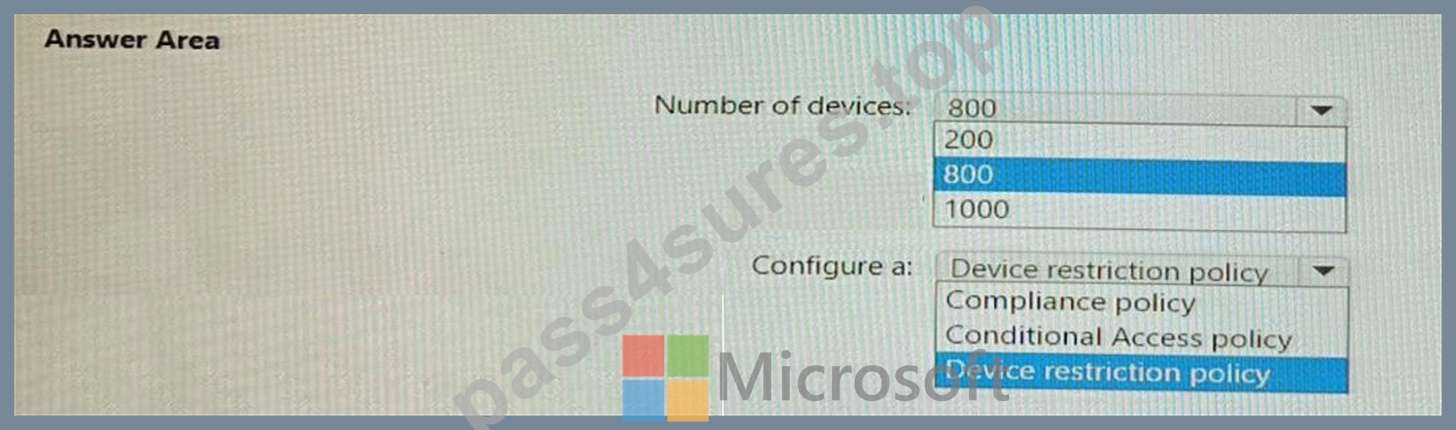
Answer:
Explanation: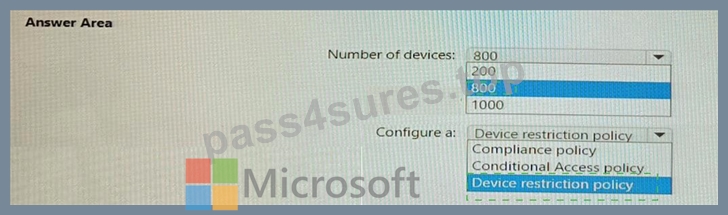
Explanation: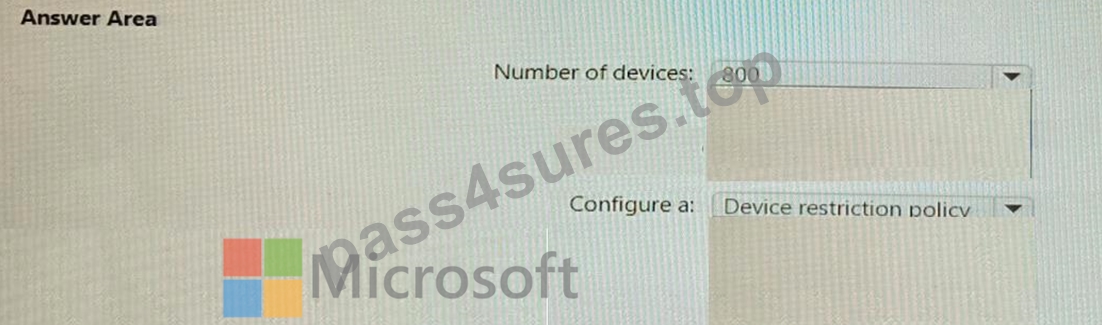
Policy 1 will update 800 iOS devices that are enrolled by using Apple Automated Device Enrollment (ADE). This is because ADE devices are supervised devices that support software update policies in Intune1. Devices that are enrolled by using the Intune Company Portal are not supervised devices and do not support software update policies2.
To ensure that only iOS/iPadOS 15.5 is installed, you should configure a device restriction policy that restricts visibility of software updates. This will prevent users from manually updating the OS to a newer version than the one you specified in Policy 11. You can use the Deployment Workbench to create and assign a device restriction profile to your ADE devices3.
NEW QUESTION # 25
User1 and User2 plan to use Sync your settings.
On which devices can the users use Sync your settings? To answer, select the appropriate options in the answer area.
NOTE: Each correct selection is worth one point.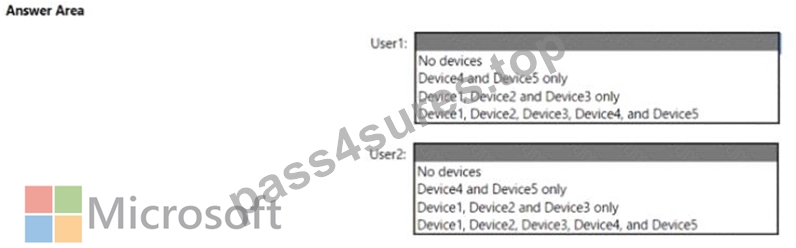
Answer:
Explanation:
Explanation
Graphical user interface, text, application, email Description automatically generated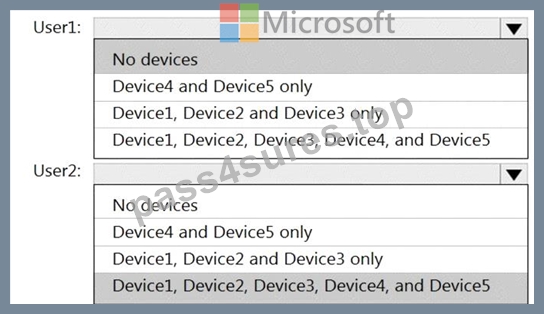
Reference:
https://www.jeffgilb.com/managing-local-administrators-with-azure-ad-and-intune/
NEW QUESTION # 26
You have a Microsoft 365 tenant and an internal certification authority (CA).
You need to use Microsoft Intune to deploy the root CA certificate to managed devices.
Which type of Intune policy and profile should you use? To answer, select the appropriate options in the answer area.
NOTE: Each correct selection is worth one point.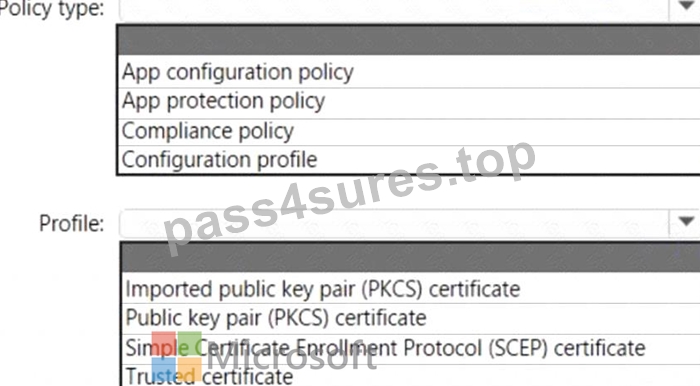
Answer:
Explanation: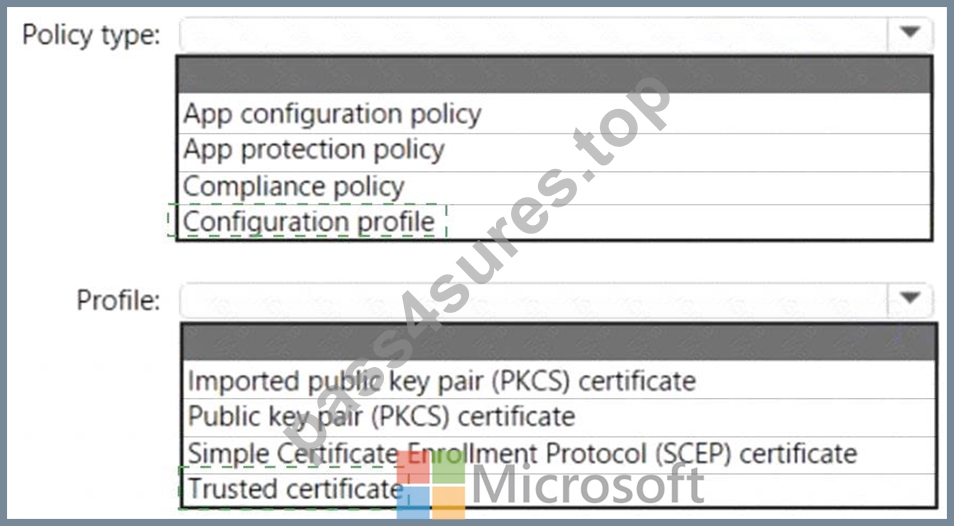
Explanation:
Box 1: Configuration profile
Create a trusted certificate profile.
Box 2: Trusted certificate
When using Intune to provision devices with certificates to access your corporate resources and network, use a trusted certificate profile to deploy the trusted root certificate to those devices. Trusted root certificates establish a trust from the device to your root or intermediate (issuing) CA from which the other certificates are issued.
Reference: https://docs.microsoft.com/en-us/mem/intune/protect/certificates-trusted-root
NEW QUESTION # 27
You have a Microsoft 365 E5 subscription and 100 unmanaged iPad devices.
You need to deploy a specific iOS update to the devices. Users must be prevented from manually installing a more recent version of iOS.
Which two actions should you perform? Each correct answer presents part of the solution.
NOTE: Each correct selection is worth one point.
- A. Enroll the devices in Microsoft Intune by using the Intune Company Portal.
- B. Create a compliance policy.
- C. Enroll the devices in Microsoft Intune by using Apple Business Manager.
- D. Create a device configuration profile.
- E. Create an iOS app provisioning profile.
Answer: C,D
Explanation:
Explanation
To deploy a specific iOS update to the unmanaged iPad devices, you need to perform the following actions:
Enroll the devices in Microsoft Intune by using Apple Business Manager. Apple Business Manager is a service that allows you to enroll and manage iOS/iPadOS devices in bulk. You can use Apple Business Manager to assign devices to Microsoft Intune and enroll them as supervised devices. Supervised devices are devices that have more management features and restrictions than unsupervised devices. You can also use Apple Business Manager to create device groups and assign roles and permissions12.
Create a device configuration profile. A device configuration profile is a policy that you can create and assign in Microsoft Intune to configure settings on your devices. You can use a device configuration profile to manage software updates for iOS/iPadOS supervised devices. You can choose to deploy the latest update or an older update, specify a schedule for the update installation, and delay the visibility of software updates on the devices34.
The other options are not correct for this scenario because:
Enrolling the devices in Microsoft Intune by using the Intune Company Portal is not suitable for unmanaged devices. The Intune Company Portal is an app that users can download and install on their personal or corporate-owned devices to enroll them in Microsoft Intune. However, this method requires user interaction and consent, and does not enroll the devices as supervised devices5.
Creating a compliance policy is not necessary for this scenario. A compliance policy is a policy that you can create and assign in Microsoft Intune to evaluate and enforce compliance settings on your devices.
You can use a compliance policy to check if the devices meet certain requirements, such as minimum OS version, encryption, or password settings. However, a compliance policy does not deploy or manage software updates on the devices6.
Creating an iOS app provisioning profile is not relevant for this scenario. An iOS app provisioning profile is a file that contains information about the app and its distribution method. You can use an iOS app provisioning profile to deploy custom or line-of-business apps to your iOS/iPadOS devices by using Microsoft Intune. However, an iOS app provisioning profile does not affect the software updates on the devices7.
References: What is Apple Business Manager?, Enroll iOS/iPadOS devices in Intune, Manage iOS/iPadOS software update policies in Intune, Software updates planning guide and scenarios for supervised iOS/iPadOS devices in Microsoft Intune, Enroll your personal device in Intune, Device compliance policies in Microsoft Intune, Add an iOS app provisioning profile with Microsoft Intune
NEW QUESTION # 28
You implement the planned changes for Connection1 and Connection2
How many VPN connections will there be for User1 when the user signs in to Device 1 and Devke2? To answer select the appropriate options in the answer area.
NOTE; Each correct selection is worth one point.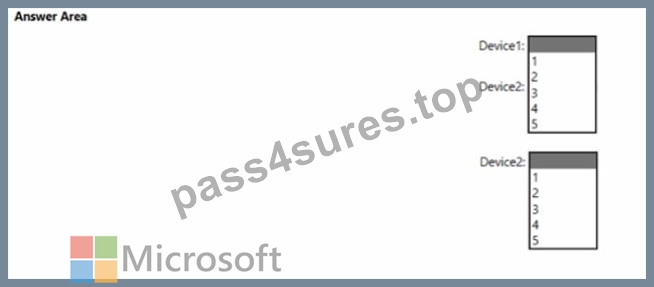
Answer:
Explanation: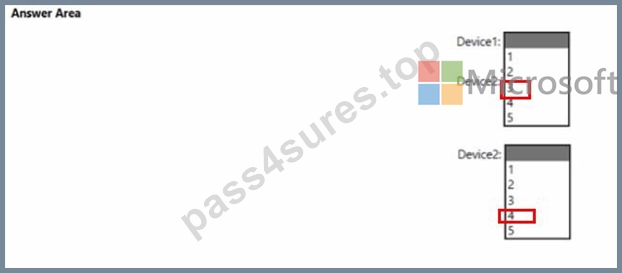
NEW QUESTION # 29
You have an Azure AD tenant named contoso.com.
You need to ensure that users are not added automatically to the local Administrators group when they join their Windows 11 device to contoso.com.
What should you configure?
- A. Windows Autopilot
- B. provisioning packages for Windows
- C. Device settings in Azure AD
- D. Security defaults in Azure AD
Answer: C
Explanation:
Explanation
To ensure that users are not added automatically to the local Administrators group when they join their Windows 11 device to contoso.com, you should configure the Device settings in Azure AD. The Device settings allow you to manage which users can join devices to Azure AD and whether they are added as local administrators or standard users. By default, users who join devices to Azure AD are added to the local Administrators group, but you can change this setting to None or Selected1.
The other options are not relevant for this scenario because:
Windows Autopilot is a service that allows you to pre-configure new devices and enroll them automatically to Azure AD and Microsoft Intune. It does not control the local administrator role of the users who join the devices2.
Provisioning packages for Windows are files that contain custom settings and policies that can be applied to Windows devices during the setup process. They do not affect the Azure AD join process or the local administrator role of the users3.
Security defaults in Azure AD are a set of basic identity security mechanisms that are enabled by default to protect your organization from common attacks. They do not include any settings related to device management or local administrator role4.
References: Manage device identities using the Microsoft Entra admin center, Windows Autopilot, Provisioning packages for Windows 10, What are security defaults?
NEW QUESTION # 30
You need to meet the technical requirements for the iOS devices.
Which object should you create in Intune?
- A. A Deployment profile
- B. A compliance policy
- C. An app protection policy
- D. A device configuration profile
Answer: D
Explanation:
Reference:
https://docs.microsoft.com/en-us/intune/device-restrictions-configure
https://docs.microsoft.com/en-us/intune/device-restrictions-ios
NEW QUESTION # 31
......
Get Top-Rated Microsoft MD-102 Exam Dumps Now: https://www.pass4sures.top/Microsoft-365-Certified/MD-102-testking-braindumps.html
Pass Your MD-102 Dumps Free Latest Microsoft Practice Tests: https://drive.google.com/open?id=10KgpHpYj-K-pbcC0G3V91_8Dk6z62XwV